
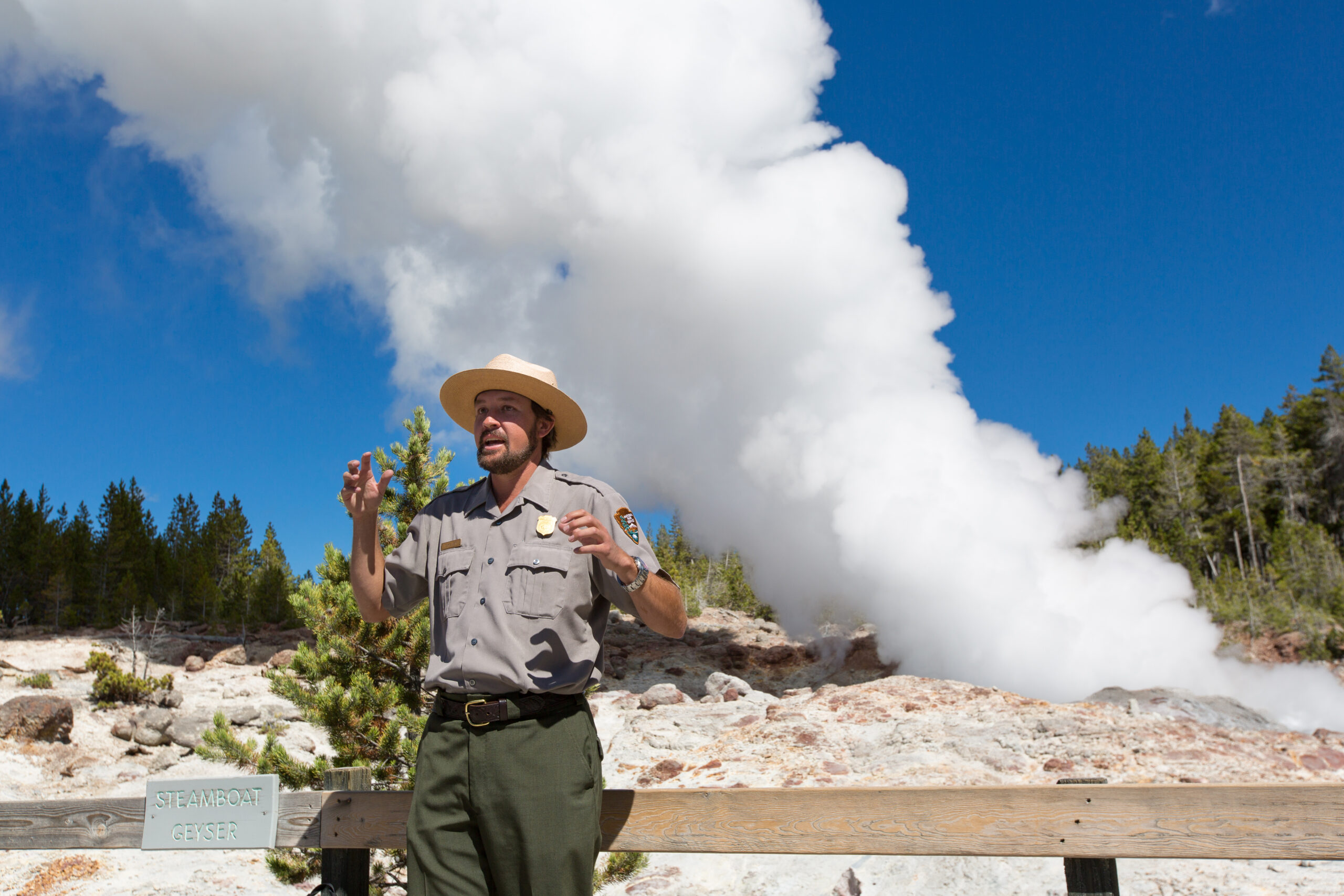
The United States has extensive public lands and waterways. Approximately 27% of the country’s land is overseen by the federal park rangers and land managers who conserve natural biodiversity, preserve historical sites and ensure the responsible use of natural resources by private industry. U.S. scientists also improve public safety by monitoring earthquake and volcanic activity, while federal engineers and foresters work to mitigate the risks that floods and forest fires pose to our communities and key infrastructure.
By the numbers
In 2024, the National Park Service managed over 330 million visitors, resulting in a $56.3 billion benefit to the nation’s economy.
National Park Service scientists who collect critical, long-term data that informs preservation initiatives have faced significant staffing cuts.
The administration has paused millions in federal funding intended for projects to protect the Great Lakes’ $20 billion dollar fishing and boating industry from invasive Asian carp.
Aerial surveys used to diagnose the health of forests have been canceled due to funding cuts and staff reductions. As a result, fire agencies and land managers have been left without critical data to inform forest fire prevention and public safety plans.
Profile · On the Ground
Executive Director of the non-profit Association of National Park Rangers
Understaffed entry stations. Filthy restrooms. Overgrown trails.
Visitors to national parks and public lands come looking for incredible vistas but increasingly they’re also finding these national treasures in disarray.
The workforce that cares for federally managed lands was not immune to the massive 2025 cuts to the federal workforce. Overall, National Park Service staff decreased by more than 8,000 employees in front-line and back-office jobs from September 2024 to February 2026, with workers laid off, bought out or resigned, according to the Partnership for Public Service. Other agencies that manage public lands saw similar significant declines in staffing levels.
Parks advocates like former Yosemite superintendent Don Neubacher say those cuts are a major driver of the shabby conditions park visitors have witnessed.
“After all the chaotic cuts and hiring freezes, the quality experience that visitors have come to expect will be difficult to provide,” Neubacher told San Francisco’s KTVU.
Bill Wade, executive director of the nonprofit Association of National Park Rangers, said the impacts run deeper than what’s visible to park visitors.
“There has been a loss of biologists and archeologists, air quality specialists and researchers who provide consultation and advice to many of the parks and provide help in monitoring the effects of climate change and other environmental issues,” Wade said. “Now there is no one to consult, and that could have real long-term consequences.”
Wade says morale is low among the park rangers he talks to as they try to do more with less. Meanwhile, reports of fewer trail and interpretive guides, fewer safety patrols and worsening maintenance continue to mount.
“It’s not because no one cares—it’s because there’s no one left to do the work,” former Yosemite park ranger Jesse Chaskin told the Sierra Nevada Ally, a nonprofit journalism collective that reports on parks and wildlands.